


Decorative Glass Panels Are Redefining Modern Homes
Homeowners and architects have been quietly cycling through the same materials for decades. Then decorative glass panels arrived as a serious residential design statement, and the conversation shifted. Decorative glass panels for the home are no longer a niche choice reserved for churches or grand commercial lobbies. They are showing up in kitchens, home offices, bedroom suites, and entryways across Northern Virginia and beyond, and interior designers are calling this one of the defining glass interior design trends of 2026. If your home still has a solid wood door where a ribbed glass panel could flood a hallway with diffused light, this article is for you.
Table of Contents
Quick Takeaways
Key Insight | Explanation |
|---|---|
Fluted and ribbed glass is the standout trend of 2026 | Vertical grooves diffuse light beautifully while adding texture, and the look works from farmhouse to ultra-modern interiors. |
Stained glass has broken out of sacred spaces | Designers are using contemporary stained glass in bathrooms, entryways, and even kitchen transoms, with bold color replacing traditional iconography. |
Custom glass panels add measurable architectural value | A one-of-a-kind glass installation cannot be replicated with a big-box product, which distinguishes a home at resale and in everyday living quality. |
Light management is the functional argument for decorative glass | Frosted, etched, and textured panels allow natural light to travel through a space while controlling glare and maintaining privacy. |
Glass partition walls replace solid walls without sacrificing openness | Frameless or minimally framed glass partitions define zones in open-plan homes while preserving sightlines and light flow. |
Not all decorative glass performs equally in every application | Acid-etched, leaded, and digitally printed glass each have specific strengths. Choosing the wrong type for an application leads to disappointing results. |
Studio-made glass is designed around your architecture, not the reverse | Off-the-shelf panels force you to adapt your design to a product. Custom glass is built to the exact dimensions, style, and light conditions of your specific space. |
Why Decorative Glass Panels Are Having a Moment
The resurgence of decorative glass in residential design is not an accident. After more than a decade of minimalism, homeowners are hungry for material richness, character, and things that cannot be ordered from a catalog. Glass delivers all three, and it does so in a way that no other material can replicate: it moves light.
Interior design publications tracking trends for 2026 have consistently flagged decorative glass, particularly fluted and stained glass, as a heritage revival that feels genuinely fresh in contemporary interiors. The appeal is not nostalgia. It is the recognition that glass can be simultaneously structural, functional, and visually extraordinary in a way that wood, stone, or tile simply cannot match.
For homeowners in Northern Virginia, where a mix of traditional architecture and modern renovation is common, decorative glass panels offer a rare opportunity: you can introduce something visually bold without committing to a full interior overhaul. A single leaded glass partition in a dining room, or a set of fluted glass cabinet fronts in a kitchen, changes the character of the entire space.
Decorative glass brings vintage appeal, artistry, and filters light in beautiful ways. It is a small detail that instantly makes a modern home feel more unique, and in 2026, designers are calling it one of the most impactful material choices available to residential clients.
The timing is right for another reason. Custom glass artistry has become more accessible for residential projects. Studios that once focused primarily on institutional and religious commissions are increasingly working directly with homeowners to design pieces that integrate seamlessly with modern living spaces.
Pro tip: If you are renovating a Northern Virginia home built between 1900 and 1970, check existing windows and doors for original leaded glass details before removing them. Restoring original glass is almost always more cost-effective and architecturally authentic than replacing it with new stock glass.
Types of Decorative Glass Panels for Residential Use
Not all decorative glass is the same, and choosing the wrong type for a specific application is one of the most common mistakes in residential glass projects. Each type has distinct optical properties, privacy characteristics, and aesthetic strengths.
Fluted and Ribbed Glass
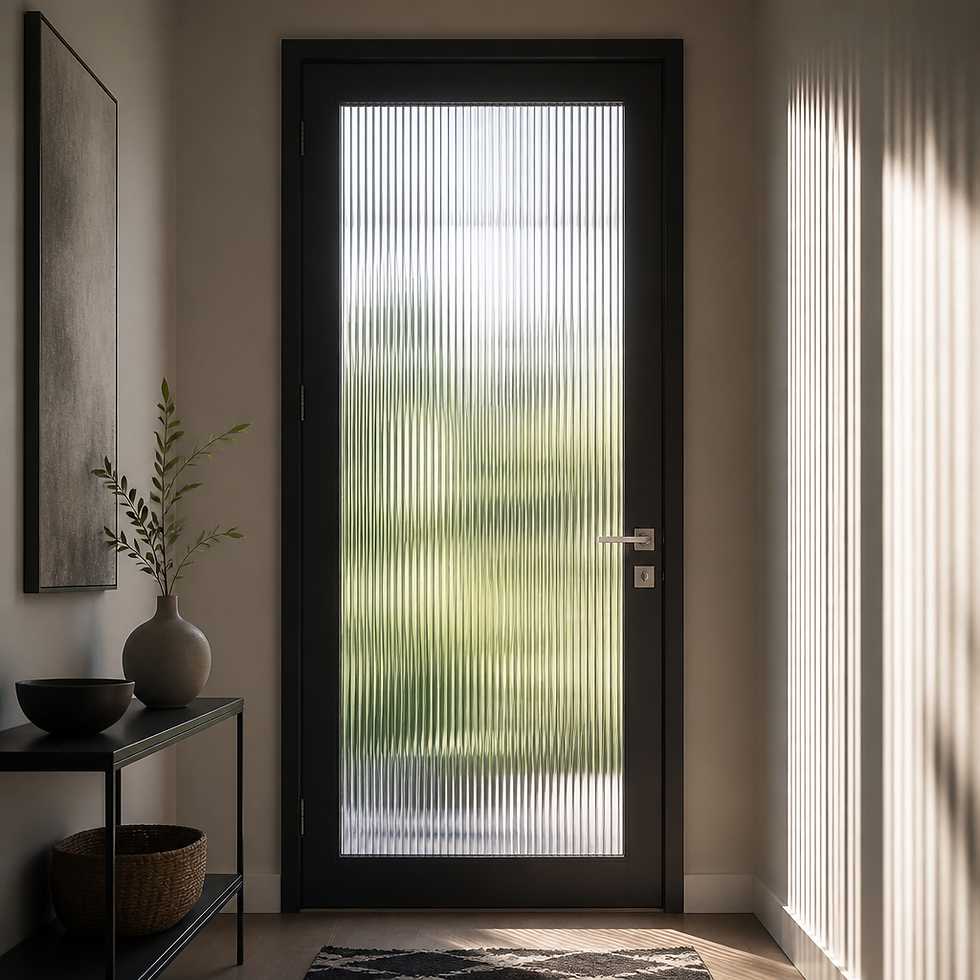
Fluted glass, also called reeded or ribbed glass, features vertical or horizontal grooves across its surface. These grooves scatter incoming light across the room, creating a soft, luminous effect without the visual heaviness of frosted glass. It provides a degree of privacy while still allowing you to perceive movement and color on the other side. Fluted glass also creates vertical lines that visually raise a ceiling, making it particularly effective in rooms with low ceiling heights.
In practice, fluted glass works best in interior doors, cabinet fronts, shower enclosures, and room partitions. Paired with dark metal frames, it reads as decidedly modern. In wood or painted frames, it can bridge a traditional and contemporary aesthetic elegantly.
Acid-Etched and Frosted Glass
Acid-etched glass is treated to produce a smooth, satin-like frosted appearance. It diffuses transmitted light evenly and reduces glare while obscuring visibility completely. This makes it the right choice for applications where full privacy is needed: shower enclosures, bathroom windows, office partitions, and sidelights adjacent to entry doors.
A common mistake is specifying frosted glass everywhere for privacy, when a partially etched or patterned design would achieve the same privacy goal with far more visual interest. Custom studios can etch precise geometric or organic patterns into glass, giving you privacy without sacrificing artistry.
Leaded and Stained Art Glass
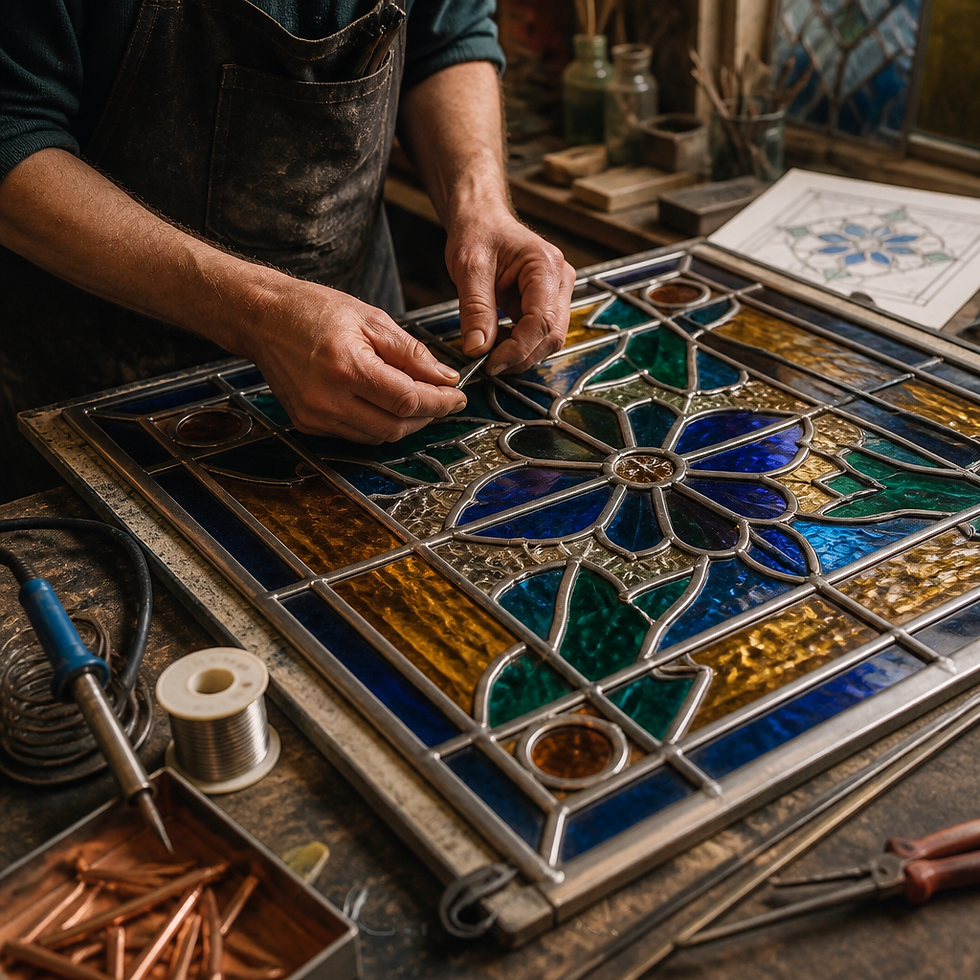
Leaded glass panels use strips of lead to join pieces of colored or textured glass into a cohesive design. This is the technique behind traditional church windows, but it is also the foundation for some of the most striking residential installations being made today. Stained art glass in a home does not need to reference religious imagery. Abstract color fields, geometric compositions, and botanical motifs all translate beautifully into leaded glass for entryways, stair landings, and transoms.
Digitally Printed and Ceramic-Printed Glass
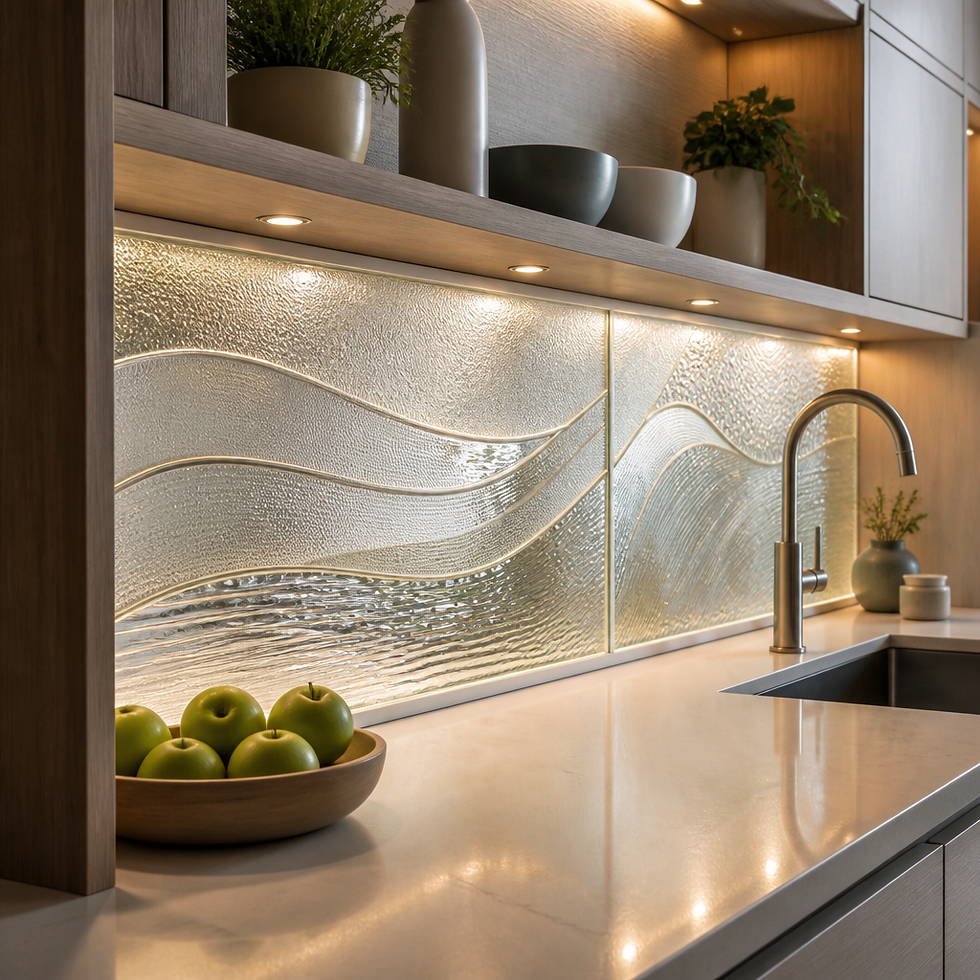
For clients who want a photographic or highly detailed pattern on glass, digital ceramic printing allows virtually any image to be reproduced on the glass surface with high resolution. This is appropriate for feature walls, backsplashes, and interior partitions where a precise visual narrative is required. The limitation is that printed glass lacks the depth and light-play of hand-crafted or textured options.
Where to Use Glass Panels in Your Home
The question is not whether decorative glass fits your home. The question is where it will have the greatest impact on the way you actually live in the space. These are the applications that consistently deliver the strongest results.
Interior Doors and Sidelights
Interior doors with fluted or etched glass panels replace the visual heaviness of solid wood while maintaining a sense of separation between rooms. For hallways that feel dark and closed, a glass-paneled door is one of the fastest ways to introduce borrowed light from adjacent rooms. Sidelights flanking entry doors are another high-impact location: they add light, depth, and curb appeal simultaneously.
Glass Partition Walls and Room Dividers
Open-concept homes face a persistent problem: how do you create a defined work-from-home space, a dining zone, or a reading nook without erecting a solid wall that kills the openness? Glass partition walls solve this precisely. Frameless glass partitions deliver a sleek, barely-there look that defines zones without interrupting sightlines or light flow. For a more architectural statement, black metal grid frames with glass infill panels add structure and contrast that reads beautifully in transitional and modern interiors.
Kitchen Cabinet Fronts and Display Niches
Glass-front kitchen cabinets have been used for decades, but the design language has evolved. Fluted glass fronts on upper cabinets are replacing plain clear glass because they add texture and allow contents to be perceived without being on full display. This is practical as well as beautiful: you get the visual lightness of glass without needing perfectly styled shelves at all times.
Bathroom Shower Enclosures and Windows
Shower enclosures in acid-etched or fluted glass offer privacy without making the bathroom feel smaller, unlike opaque shower curtains or solid enclosures. Fluted glass in a shower also reduces the visual prominence of water spots and soap buildup between cleanings, which is a genuine daily-life advantage.
Stair Railings and Balustrades
Glass balustrades on interior staircases are an architectural choice that transforms vertical circulation from a functional necessity into a design feature. Tempered clear or low-iron glass panels in stair railings open up two-story spaces and allow light to travel between levels, which is particularly effective in homes where natural light is limited on interior floors.
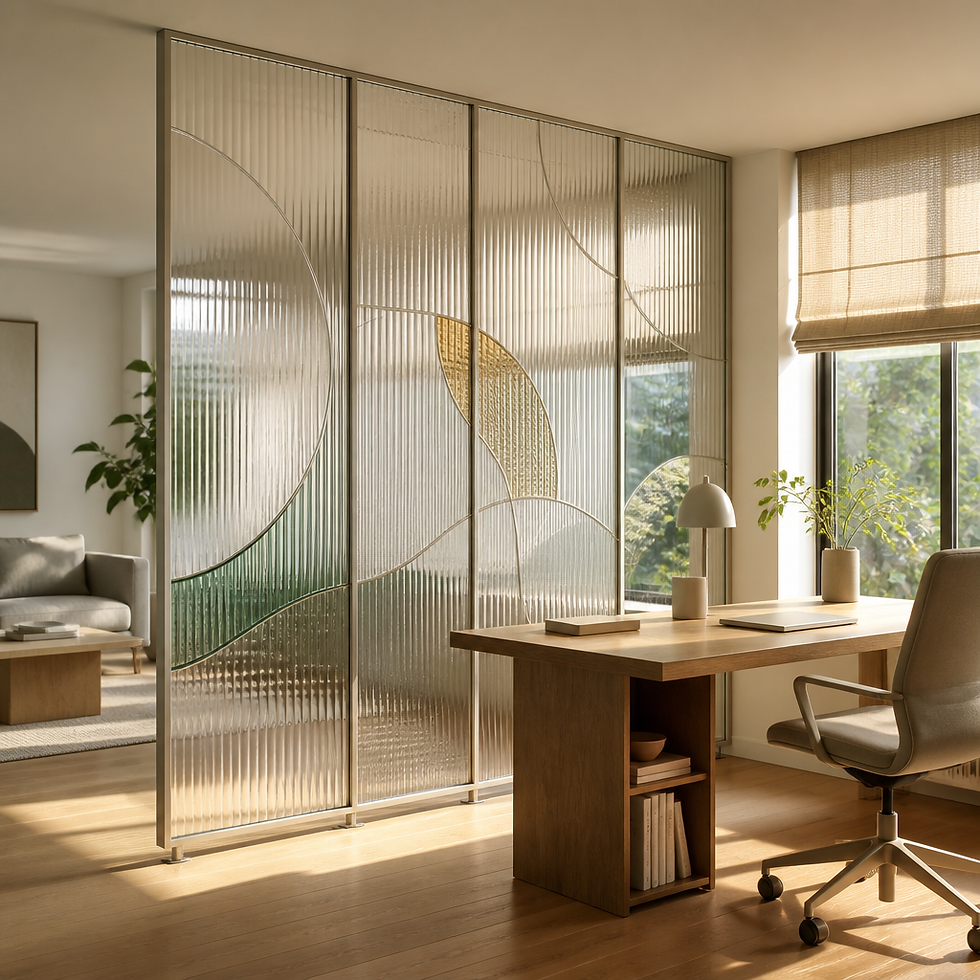
Pro tip: When planning a glass partition or balustrade installation, always account for the hardware and framing finish before selecting the glass type. The frame finish, whether brushed brass, matte black, or polished chrome, sets the tone for the entire installation and should be decided before the glass specification is finalized.
Comparing Glass Panel Approaches for Modern Interiors
Choosing between decorative glass types is a decision that should be driven by the specific function, privacy requirement, and aesthetic of each application. This comparison covers the three most common approaches for residential interiors.
Glass Type | Best Applications | Key Strengths and Limitations |
|---|---|---|
Fluted / Ribbed Glass | Interior doors, cabinet fronts, shower screens, partitions | Excellent light diffusion, vertical line effect raises perceived ceiling height, partial privacy. Not suitable where full opacity is required. |
Acid-Etched / Frosted Glass | Bathroom windows, shower enclosures, office partitions, entry sidelights | Complete privacy, even light diffusion, reduces glare. Less visually dynamic than textured or colored options. Custom patterns possible for added interest. |
Leaded / Stained Art Glass | Entryways, transoms, stair landings, feature windows, restoration projects | Unmatched artistic depth and color, genuine craftsmanship, increases property character. Requires skilled studio work, not suitable for standard stock replacement. |
Stained Glass Is Not Just for Churches Anymore
One of the most significant shifts in the current glass interior design trend is the re-framing of stained glass as a residential medium. For most homeowners, stained glass has been mentally categorized as something that belongs in a church or a Victorian-era house. That categorization no longer holds.
Interior designers working in 2026 are specifying stained glass for residential entryways, bathroom windows, and even kitchen transoms, using abstract, geometric, and botanical compositions that have no historical or ecclesiastical connotation. The technique, which uses hand-selected colored glass joined with lead came, is the same. The imagery and palette are entirely contemporary.
What makes this shift possible is the collaboration between clients and skilled glass studios. A homeowner who wants a bold color statement in a stairwell landing does not need to accept a catalog of pre-made religious motifs. A good glass studio will work from the architecture, the interior palette, and the client's own aesthetic preferences to develop a design that is genuinely original. That is a fundamentally different product from anything available off the shelf.
For churches in Northern Virginia that are already familiar with the medium, this trend is an opportunity to revisit existing installations. Many congregations have historic stained glass that has never been professionally documented, assessed for structural integrity, or conserved. As residential interest in the craft increases, so does the pool of skilled studio talent available to work on restoration projects alongside new residential commissions.
The practical argument for stained glass in a home is also straightforward: it solves a design problem that no other material addresses as elegantly. A window that faces a neighboring building, a side light that looks directly onto a utility wall, a bathroom window that needs both light and privacy. Stained or etched art glass turns each of these liabilities into a deliberate design feature.
Working with a Custom Glass Studio vs. Off-the-Shelf Options
Off-the-shelf decorative glass panels are available from large home improvement retailers, and for certain applications, such as a basic frosted shower screen or a standard-size fluted glass insert for a stock cabinet door, they can be a reasonable choice. But the limitations become apparent quickly when the project involves anything that requires precision, artistry, or integration with existing architecture.
What Off-the-Shelf Glass Cannot Do
Stock panels come in standard dimensions. Your wall opening, door frame, or window rough opening almost certainly does not match those dimensions exactly. The result is either a poor fit requiring filler strips and visible gaps, or a forced modification to the surrounding architecture that compromises the design. Stock glass also offers no customization of pattern, color, texture, or thickness.
More fundamentally, off-the-shelf glass is a product. A custom glass installation is a commission. The difference is the same as the difference between a reproduction print and an original painting. One is reproducible. The other is specific to your space, your architecture, and your intent.
The Custom Studio Process
Working with a specialized glass studio like Aldie Glassworks begins with an architectural assessment of the space. The studio documents existing conditions, existing light quality, existing sightlines, and the architectural language of the surrounding surfaces. From that foundation, a design is developed that responds to the specific conditions of the installation, not to a generic template.
For custom glass installations, every dimension is made to order. The glass type, thickness, color, and texture are selected for the specific light conditions and use requirements of the application. This is the only way to produce a glass panel that looks as though it was always supposed to be there, which is the mark of exceptional architectural glass work.
Restoration projects follow a similar process. When a church or historic home has existing stained or leaded glass that has deteriorated, the studio begins by documenting the original design, assessing the structural condition of the lead came and glass pieces, and developing a conservation plan that preserves as much original material as possible. This requires skills and materials that no retail product can replicate.
The difference between a custom glass commission and an off-the-shelf panel is not just visual. It is architectural. Custom glass is made for one specific space, one specific light condition, and one specific client. That specificity is exactly what makes it last.
If you are considering decorative glass for a Northern Virginia home or a church restoration project, the right first step is a conversation with a studio that has deep experience in both design and fabrication. At Aldie Glassworks, every project begins with that conversation, and the design process is collaborative from the first meeting through installation.
Frequently Asked Questions
What rooms benefit most from decorative glass panels?
Entryways, hallways, bathrooms, and home offices see the greatest functional benefit from decorative glass panels, because these are spaces where light management and privacy are often in conflict. A frosted or fluted glass panel in a hallway door solves both problems simultaneously. Kitchens and living rooms benefit most from the aesthetic dimension: glass-front cabinets, partition walls, and feature windows add visual depth that no other material delivers in the same way.
How do I choose between fluted glass and frosted glass for an interior door?
The choice depends on your privacy requirement and light goals. Fluted glass allows you to perceive movement and color through the panel while providing partial privacy, and it creates a more dynamic light effect as the day progresses. Frosted or acid-etched glass provides complete visual opacity while still transmitting light. If full privacy is essential, frosted is the right choice. If you want a more visually interesting effect and partial privacy is acceptable, fluted glass is the stronger aesthetic choice.
Is stained glass appropriate for a modern or contemporary home?
Yes, without qualification. The technique of leading colored glass together into a panel is centuries old, but the design language applied to that technique can be entirely contemporary. Abstract geometric compositions, organic botanical forms, and bold single-color fields in stained glass read as completely modern when designed correctly. The key is working with a studio that designs from your interior palette and architectural context rather than from a catalog of historical motifs.
How long does a custom decorative glass panel installation take?
Timelines vary depending on the complexity and scale of the project. A single custom etched or fluted glass panel for a door insert can typically be fabricated and installed within a few weeks once the design is approved. A full leaded art glass commission for a feature window or entryway involves design development, glass selection, fabrication, and installation, and realistically takes several months from first consultation to completion. Restoration projects involving historic glass have their own timeline based on condition assessment findings. The best approach is to start the conversation early, well before any renovation or construction deadline.
Can decorative glass panels be used in older homes without clashing with the existing architecture?
This is actually where custom glass excels. A skilled studio designs the glass to respond to the existing architectural language of the home, not to impose a foreign aesthetic onto it. In a Craftsman-style home, leaded glass with geometric organic motifs is historically consistent and visually harmonious. In a colonial revival home, etched glass transoms above interior doors are architecturally appropriate. The glass type, color palette, and framing details are all calibrated to the home's existing character. Off-the-shelf products cannot do this. Custom studios do it routinely.
What is the difference between an architectural glass installation and standard window replacement?
Standard window replacement is a performance-focused trade: you are replacing a unit to improve energy efficiency, functionality, or fit. Architectural glass installation is a design-focused discipline: the glass is conceived as a deliberate visual and spatial element of the interior, not simply as a functional component. The two are not mutually exclusive, but the process, the skill set, and the outcome are fundamentally different. A glass artistry studio brings design intent, material knowledge, and fabrication craft to every installation, which produces a result that a standard glazing contractor is not equipped to deliver.
Have you incorporated decorative glass panels into your home or considered one for a renovation project? Share your experience or questions in the comments below.
References
Interior design trends for 2026 including decorative glass as a leading material choice
Fluted glass as the next major interior design trend for residential spaces in 2026
How stained glass is making a major design comeback in contemporary residential interiors
Guide to residential glass partition walls and how they elevate modern home interiors
Overview of decorative glass types and their interior and exterior architectural applications


Comments