


Kiln-Formed Glass in Virginia: Where Heat Meets Artistry
Most people picture stained glass when they hear the phrase "glass art." Kiln-formed glass takes a different path. Sheets, granules, and fragments are stacked, fired, and shaped inside a kiln until they bond into one solid piece. For anyone searching for kiln-formed glass Virginia studios can deliver, the real question is where the technique fits. Across the commissions we take on, from congregations to homeowners to commercial offices, it fits more places than most people expect. It only works, though, when the design, the glass selection, and the firing schedule are planned together from the start.
Table of Contents
Quick Takeaways
Key Insight | Explanation |
|---|---|
Color and texture are fired into the glass | Finishes set during firing do not depend on a coating that can peel or wear off, which is a real advantage in high-traffic spaces. |
Glass compatibility matters more than color choice | Glasses with mismatched expansion rates build internal stress and crack during cooling. Ask for the manufacturer and compatibility rating before approving a design. |
Cooling takes longer than firing | Annealing is the slow cool-down that relieves stress. Rushing it is the most common reason a finished piece fails. |
Churches should plan around the calendar | Installation has to fit services, weddings, and funerals. Building committee approvals often take longer than fabrication. |
Homeowners should judge pieces in their actual light | A test sample under showroom lighting can look nothing like the same piece beside a bright window in the afternoon. Always test in the room. |
Commercial owners need glazing input at concept stage | Glass in doors, railings, and overhead locations carries safety requirements. Bring your architect or general contractor in before the design is final. |
A cracked piece is not always a total loss | Surface chips can often be ground and polished. Cracks through the body usually mean replacement. |
What Kiln-Formed Glass Actually Is
Kiln-formed glass is a family of techniques, not a single product. Fusing stacks pieces and heats them until their edges and surfaces melt together. Slumping heats glass over a mold until it sags into a curve or bowl. Casting pours or presses molten glass into a mold. Each method leaves a different surface and depth, so the choice of method should come before any decision about color.

Why the Kiln Changes the Glass
The kiln does more than hold heat. It fuses the separate components into one material, which is why a well-built panel looks seamless rather than assembled. Colors that look distinct in a studio can blend into soft gradients once fired, and some clear layers take on a depth that cut glass alone cannot achieve. That is the appeal, and it is also why surprises happen.
In practice, the first design is rarely the one that gets fired. Artists test how colors interact, how thick layers settle, and how light passes through each combination. Skipping that step is how clients end up with a panel that looks muddy or flat in the room where it will hang.
Frit, Stringers and Sheet Glass
Frit is crushed glass in granular form, sprinkled into patterns or used to build texture. Stringers are thin rods of glass that draw lines across a surface, useful for outlining shapes or creating movement. Sheet glass forms the backbone of most panels, cut to shape and layered. Each material melts at a different rate, so the mix affects how the finished surface reads.
Pro tip: Ask for a test tile fired with the exact glass combination in your design before committing to a full panel. A test tile shows how colors shift and gives an early warning about layers that may not sit well together.
The Firing Process and Why Cooling Matters
A firing has three stages that matter to the client: the heat-up, the hold at peak temperature, and the cool-down. Each one is scheduled to suit the thickness of the glass and the shape of the piece. Heavier panels need slower ramps, and a complex slumped form may need extra holds so it sags evenly. A studio that treats every firing the same is taking shortcuts.
The cool-down is where most failures start. Annealing is the controlled, slow cooling that lets internal stress relax. If a piece cools too fast, stress stays locked inside the glass, and the crack may not appear for days or even months after installation. That delay is the worst outcome for a client, because the damage is discovered after the work is paid for and hung.
Annealing and the Temptation to Rush
Many people assume the firing is the hard part and the cooling is just waiting. In practice, annealing is where experience matters most. Opening a kiln early to check a piece is a common mistake, and it can turn a sound panel into a cracked one within minutes. Patience at this stage is a technical requirement, not a preference.
When we review a failed piece, the cause is usually found in the cooling record rather than the artwork itself. That is why we keep firing logs for every commission, so a client can see exactly how their piece was handled.
Compatibility Between Glass Types
Every glass has a rate at which it expands and contracts with temperature. When two glass types with different rates are fired together, one wants to shrink more than the other, and the joint carries that tension. Combining glasses without checking compatibility is one of the most reliable ways to lose a piece. Ask your studio which manufacturers and compatibility ratings they use, and why.
Kiln Glass in Architectural Settings
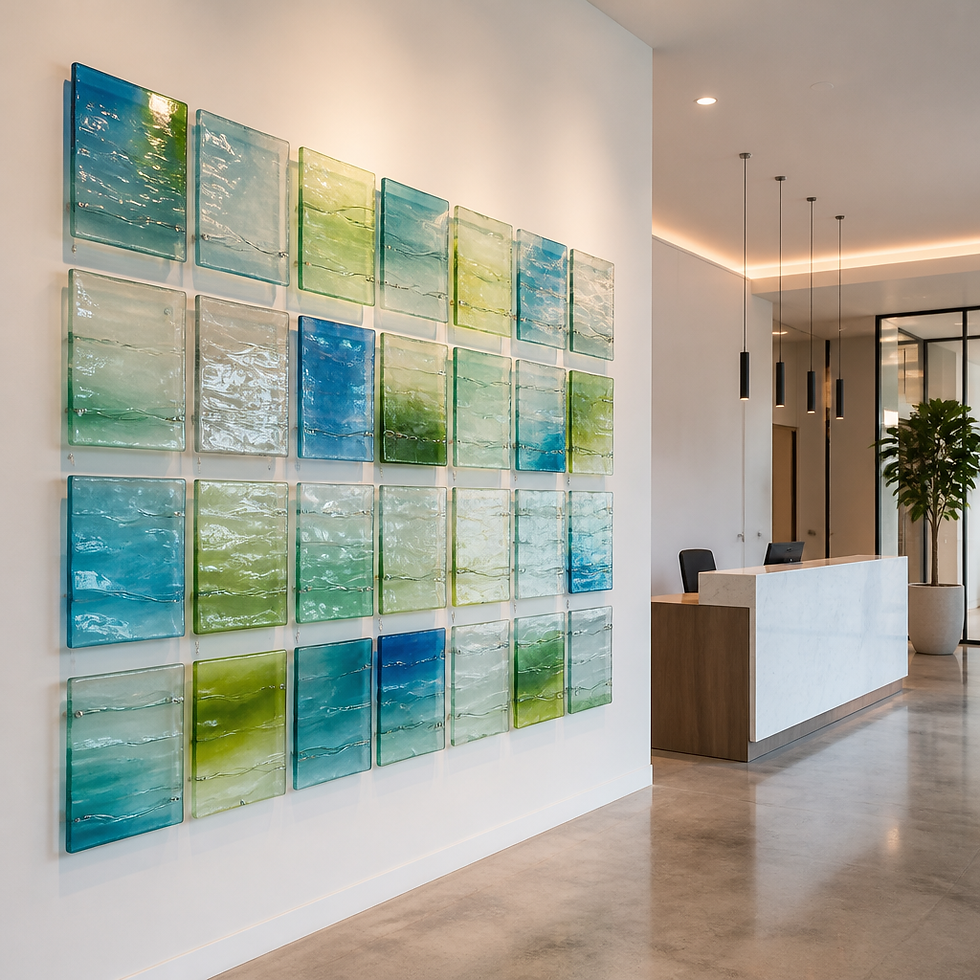
Architectural use is where kiln-formed work moves from decorative object to part of the building. Panels can serve as focal walls, dividers, ceiling elements, or backlit installations. The advantage over painted or printed finishes is depth. The disadvantage is weight and cost, so the design needs to account for how the piece will be supported, lit, and maintained.
Interior Panels and Feature Walls
Interior panels are the most common architectural use we see. A feature wall in a lobby or a glass divider in an office can carry a large design without the heavy presence of solid stone or tile. Mounting matters as much as design. A panel needs a frame or support system that handles its weight and allows for small movements in the building over time.
Light direction also changes everything. A panel designed for diffuse light will look washed out under strong direct light, and a panel designed for a bright atrium may look too dark in a room with few windows. Plan the lighting and the glass together.
Doors, Sidelights and Glazing Limits
Glass in doors, sidelights, railings, and overhead locations is subject to safety glazing requirements. These requirements vary by location and by use, so there is no single answer that applies everywhere. The right step is to confirm the specific rules with your local building official and your glazing consultant before the design is finalized. Designing a beautiful panel that cannot legally go where you want it is an expensive mistake.
Kiln-formed glass can be made to meet many of these needs, but the engineering has to be part of the design conversation from the first sketch. Adding it at the end usually means redesigning the piece.
Backlit and Illuminated Installations
Backlighting shows off the depth and translucency of kiln work better than anything else. A layered panel in front of an LED source can glow with color that daylight never reveals. The trade-off is that the light source becomes part of the artwork, so the lamp type, placement, and heat output all need to be considered. Test the piece with the actual lighting system before fabrication.
Churches and Sacred Spaces
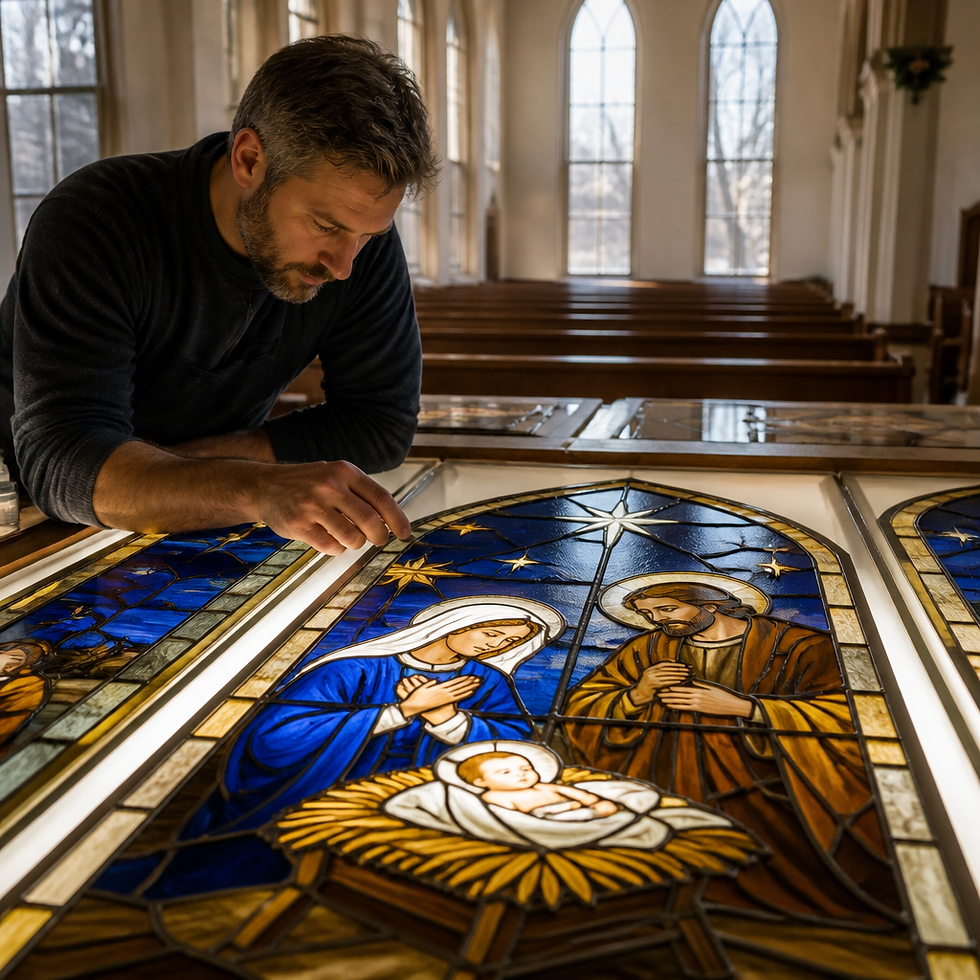
Congregations come to kiln-formed glass for many reasons, but the most common is a memorial or dedication piece. A window or panel can honor a family, a former pastor, or a ministry, and it can carry lettering or a symbol that is meaningful to the community. The glass has to serve the building for decades, so durability and clarity of the design matter as much as beauty.

Memorial and Dedication Panels
Lettering can be built into the fired piece with fine glass elements, or it can be applied after firing. The method determines how durable the text will be. Text built into the piece lasts with the glass itself, while applied lettering depends on the finish and how the panel is cleaned. Ask which method is being used and how it will look from the pews.
Inscriptions also need careful proofreading. A dedication piece is permanent in practice, and a misspelled name is painful to fix. Send the final text in writing and confirm it with the congregation before fabrication starts.
Matching an Existing Window Program
Many churches have older leaded windows, and they often want new pieces that blend in. Kiln-formed glass rarely matches traditional leaded glass exactly, because the surface, thickness, and way light passes through are different. A good designer will show you where the match is close and where it will look like a newer addition. Being honest about that difference is better than promising a seamless match that will disappoint.
Scheduling Installation Around Services
A sanctuary cannot stop for installation during a service, a wedding, or a funeral. Plan the install window with the facilities team early, and build in a buffer for weather or access problems. Building committees often need time to approve designs, which can take longer than fabrication itself. Starting that conversation early keeps the project on schedule.
Homeowner Projects
For homeowners, kiln-formed glass works best in places where light, touch, and color matter every day. Kitchens, entries, bathrooms, and stairwells are common locations. The key is to choose a location where the piece will be seen and touched in the way you expect, and to plan for the room's conditions from the start.
Kitchen Backsplashes and Shower Walls
Fused glass panels can work well as backsplashes, where their color and texture catch light over a counter. Wet areas need more care. The substrate behind the glass must be sound, the sealing must be done correctly, and the grout or adhesive must suit the glass. A backsplash behind a range needs a heat check, since heat from cooking can affect adhesives and surrounding materials over time.
Pro tip: Before ordering a backsplash, have a sample panel installed on the actual wall for a week. Look at it at breakfast, at dinner, and with the overhead lights on, because the piece will change throughout the day.
Entry Sidelights and Transom Pieces
Sidelights and transoms are one of the most rewarding homeowner uses. They bring color into an entry without giving up privacy, and they make a home feel considered from the front walk. Because these pieces sit in an exterior opening, they face temperature swings and weather. Confirm that the glass and the frame are rated for the location, and check how the piece will look from both inside and outside.
Choosing Pieces for Natural Light
Natural light is the strongest variable in a homeowner project. A piece beside a south-facing window can glow in the afternoon and look flat in the morning. A piece in a shaded hallway may need more contrast to hold its design. Tell your studio exactly which windows and times of day matter most, so the design can be tuned to the way you live in the room.
Commercial Property Projects
Commercial owners approach kiln-formed glass with different priorities. They care about brand identity, wayfinding, durability in busy spaces, and the timeline for opening day. A well-planned kiln-formed installation can carry a brand's visual language while standing up to daily use. It can also become a memorable part of the building's identity.
Lobbies and Wayfinding
Lobbies are high-visibility spaces where a glass installation can do real work. A panel can mark a reception area, define a corridor, or act as a visual anchor that helps visitors orient themselves. The design should be readable from a distance, not only up close. Test the scale by mocking up the piece at full size, if possible, with tape or printed templates on the actual wall.
Lead Times and Budget Planning
Commercial projects move through several gates: concept approval, test firing, final design, fabrication, and installation. Each gate adds time, and each one is a chance for changes that affect cost. The most expensive change is a redesign after firing has started. Lock the design, the glass selection, and the mounting method before the kiln is loaded, and your budget will stay closer to the original number.
Budget also depends on the size and complexity of the piece. A large single panel may be less expensive per square foot than many small components, but the handling, support, and install requirements can change that calculation quickly.
Cleaning and Long-Term Maintenance
Maintenance for kiln-formed glass is usually straightforward, but it needs to be planned. Use non-abrasive cleaners and soft cloths, especially on textured or slumped surfaces where dirt collects in low spots. Abrasive pads can scratch the surface, which dulls the depth that made the piece worth commissioning. Give the building's maintenance staff a written care sheet at handover, so cleaning does not undo the work.
Comparing Fusing, Slumping and Leaded Glass
Clients often ask which approach to choose. The answer depends on the look, the location, and the level of detail required. The table below compares three common approaches so you can see where each one fits and where it can disappoint.
Approach | Best Use | Main Trade-off |
|---|---|---|
Fusing | Layered color panels, backsplashes, and interior feature walls where depth and smooth surfaces matter | Requires careful compatibility checks and test firings, and fine detail is harder to control than with traditional methods |
Slumping | Curved bowls, sculptural forms, and dimensional elements that catch light from different angles | Mold costs and heat-cycle planning add lead time, and tight tolerances for flat mounting can be difficult |
Traditional leaded glass | Matching existing leaded windows and projects where linework and historic character are the priority | Lead lines and heavier construction limit the scale of imagery, and the look differs from fired color work |
Fusing gives the most color depth for the cost, but it asks more of the designer during testing. Slumping opens up sculptural possibilities, although its forms need to be planned around the mold and the mounting. Leaded work remains the right answer when a building already speaks in that language.
In most cases, the best result comes from pairing methods rather than choosing only one. A church might use leaded glass for a historic window run and kiln-formed panels for a new memorial piece in the same building. That combination respects the existing character while adding something new.
Restoration and Repair
Restoration work is one of the least discussed parts of kiln-formed glass, but it matters to owners who already have a piece installed. A panel can be damaged by impact, by a cracked frame, by a failing seal, or by settling in the building. The first step is always an honest assessment of what happened and what can be saved.
Assessing Edge Chips and Stress Cracks
Not all damage is equal. Edge chips and small surface scratches are often repairable through careful grinding and polishing, which can restore a clean edge without changing the design. Stress cracks that run through the body of the glass are a different problem. In most cases, those pieces need to be replaced, because heating a cracked piece again can spread the stress and make the damage worse.
When we assess damage, we look at where the crack starts, whether it is growing, and whether the cause is still present. A crack that started from an unsupported edge will return if the mounting is not corrected first.
When a Piece Should Be Remade
Remaking a piece is the right call when the design is intact but the damage is too deep to repair, or when the original glass is no longer available in the same formulation. Remaking gives you a chance to correct the issues that caused the first failure, such as poor support or an incompatible glass combination. It is more expensive than a repair, but it often produces a more reliable result.
Pro tip: Photograph the piece and its mounting hardware before you call for service. These images help a studio determine the cause of damage and avoid repeating it in the replacement.
Protecting Restored Work
Once a piece has been repaired or remade, protect it from the conditions that caused the problem. Check the frame, the seals, and the support points at least once a year, and address any movement in the building before it affects the glass. A small adjustment early costs far less than a full replacement later.
Commissioning a Custom Piece
Clients who reach out to us for custom kiln glass in Leesburg, VA, usually arrive with a building, a budget, and a sense of what they want the piece to do. The best projects begin with clarity about purpose, location, and timing. A clear brief saves weeks of revision and helps the design reach the kiln in good shape.
What to Bring to a First Consultation
Bring photographs of the space at different times of day, measurements of the opening or wall, and any existing finishes or window styles that the new piece needs to relate to. If the project is for a congregation or commercial building, bring the name of the person who will approve the design and the schedule for those approvals. If you have a color palette, bring samples or photographs that show how the color should feel, not only what it should be called.
Think about the purpose of the piece before the look. A memorial panel, a wayfinding element, and a decorative backsplash need different levels of durability, detail, and mounting. Naming the purpose first helps the designer choose the right technique.
Questions to Ask Any Studio
Ask which glass manufacturers the studio uses and how it checks compatibility between them. Ask whether test tiles are included in the process and how the firing schedule is recorded. Ask how the piece will be mounted, what the support requirements are, and who is responsible for confirming glazing rules where those apply. A good studio will answer these questions directly and in writing.
Ask about maintenance too. A studio that gives you a written care sheet and a plan for future repairs is thinking about the piece for the long run, which is what a glass installation should be designed for.
Frequently Asked Questions
What is the difference between fused glass and kiln-formed glass?
Fused glass is one technique within the wider category of kiln-formed glass. Kiln-formed glass also includes slumping and casting, which shape glass over molds rather than only joining layers. When a studio says it works in kiln-formed glass, it usually means it can apply several methods depending on the design.
How long does a custom kiln-formed glass piece take to complete?
The timeline depends on design approval, test firings, fabrication, and installation scheduling. A simple residential piece can move faster than a large commercial installation that needs engineering review and building approvals. Ask your studio for a schedule with each gate listed, so you can see where delays are most likely.
Can kiln-formed glass be used in exterior locations?
Yes, but the location must be planned carefully. Exterior pieces face temperature changes, moisture, and sometimes impact, so the glass, frame, and sealing must be suited to those conditions. Confirm the specific requirements for your building with your glazing consultant before the design is finalized.
Will a kiln-formed panel match my existing leaded windows?
Usually it will not match exactly. Kiln-formed glass has a different surface, thickness, and light behavior than traditional leaded glass. A good designer will show you where the match is close and where the new piece will read as a contemporary addition, so you can decide whether that difference suits the building.
How do I care for a kiln-formed glass installation?
Clean the surface with a soft cloth and a non-abrasive cleaner, and avoid scrubbing textured areas where dirt collects. Inspect the frame, seals, and support points regularly, and address any building movement early. Keep the studio's care sheet with the building's maintenance records so future staff know how to handle the piece.
What has your experience been with kiln-formed glass, whether as a congregation, homeowner, or property manager? Share your questions or project details with us through the contact page on our website.


Comments